

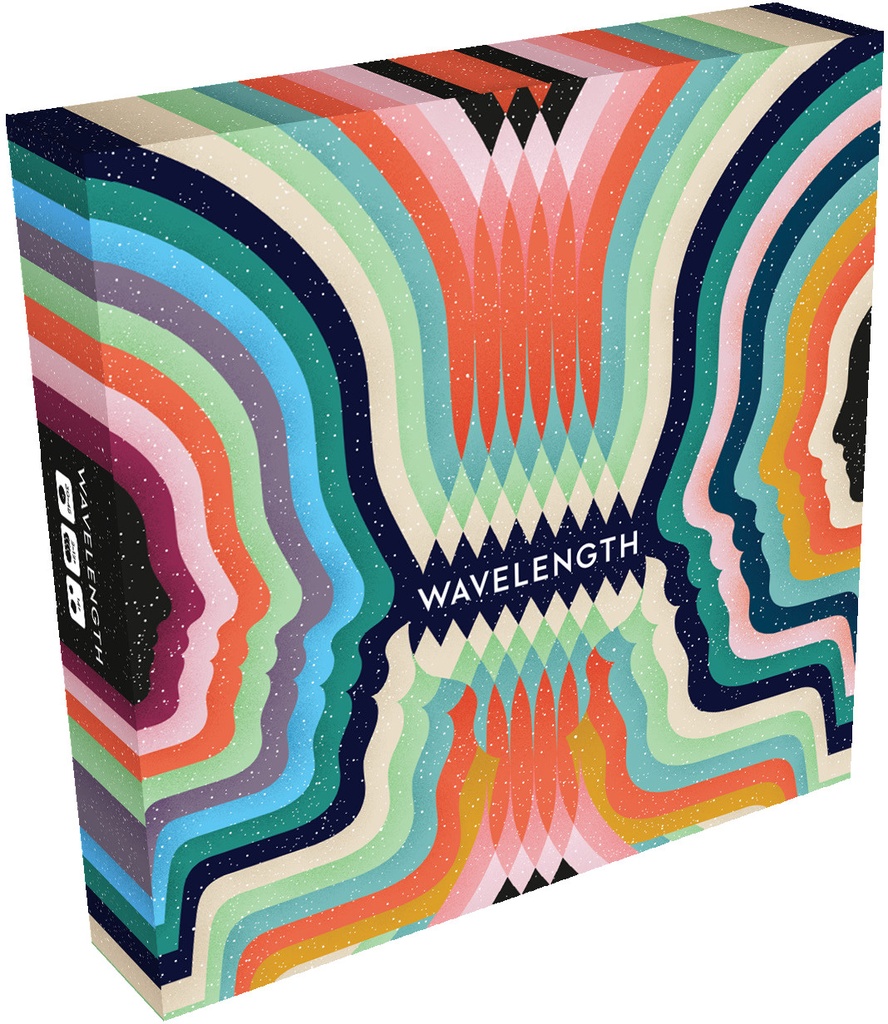
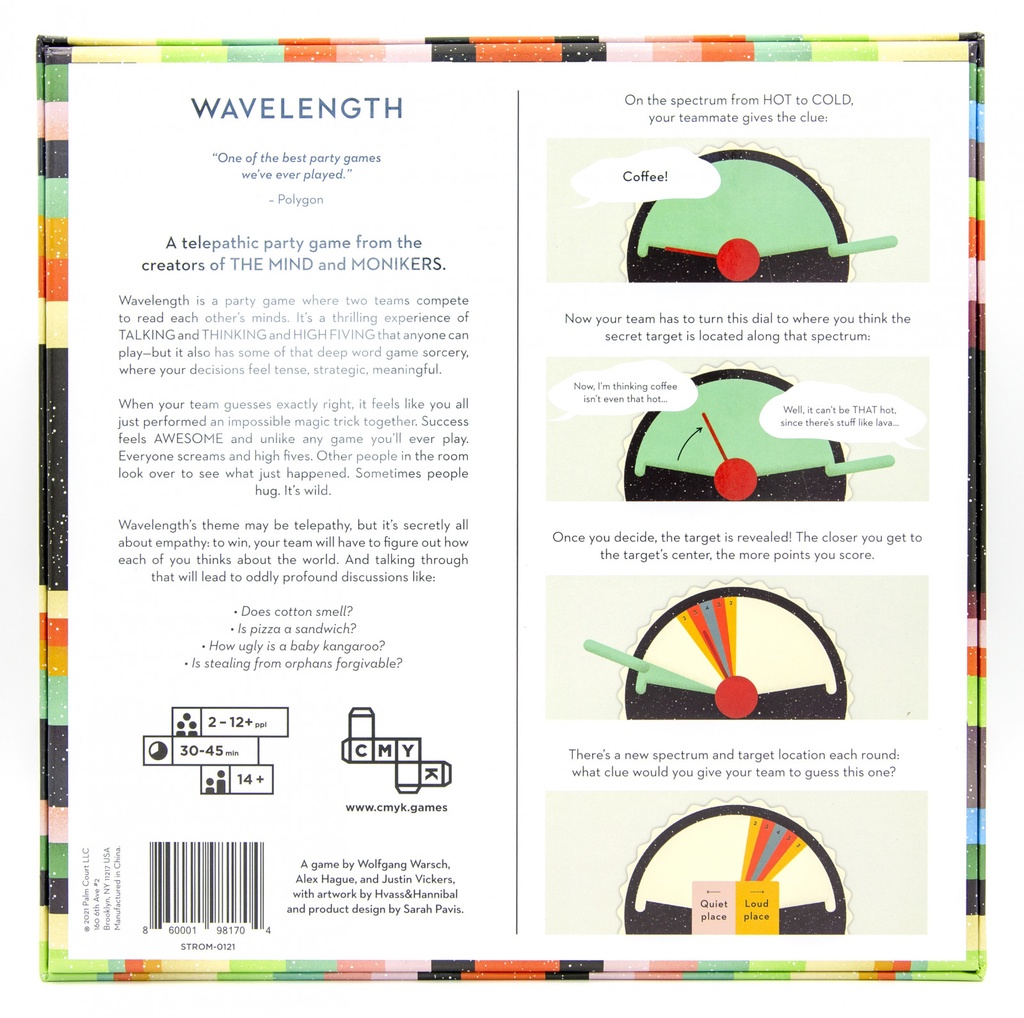
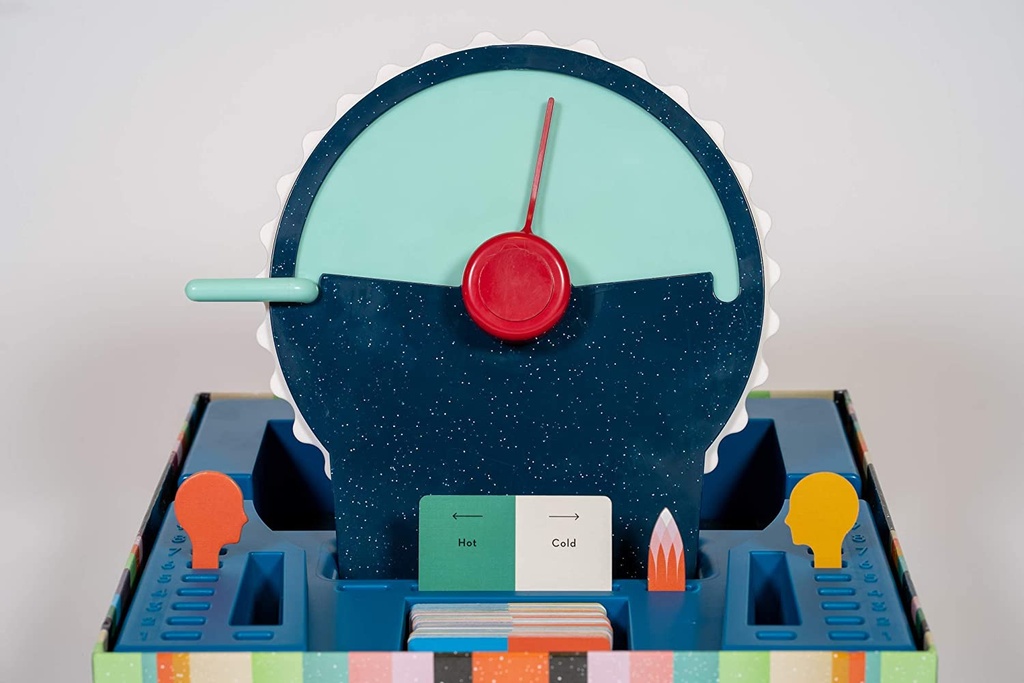



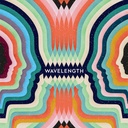
Wavelength is a mind-reading party game where teams compete to interpret each other's thinking. One player (the Psychic) sees a hidden bullseye on a spectrum between two binaries (Hot-Cold, Job-Career, Fantasy-Sci-Fi) and must give a conceptual clue that pinpoints exactly where the bullseye sits. Their team then rotates a dial to where they think the target is. The closer to the bullseye, the more points you score. Award-winning design ensures brilliant, hilarious moments as teams try to read the Psychic's mind.
How to play
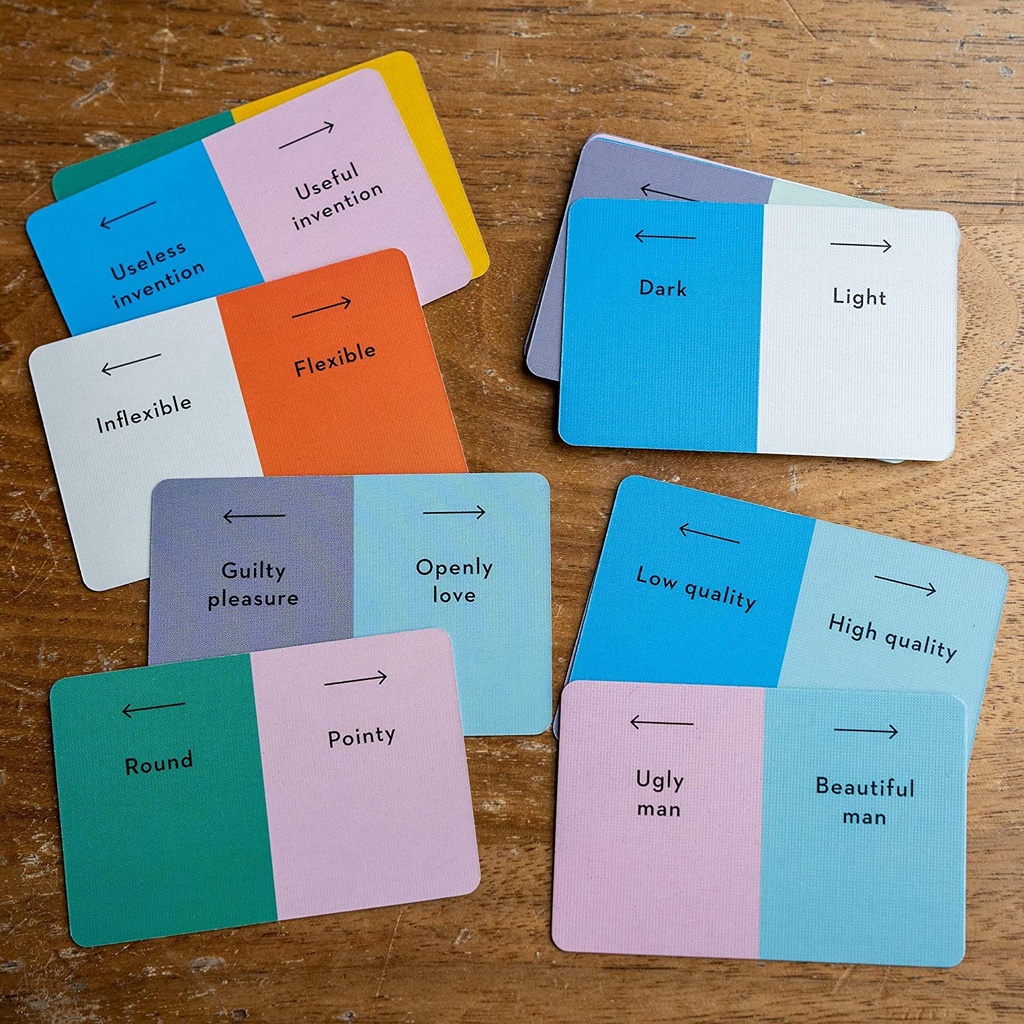
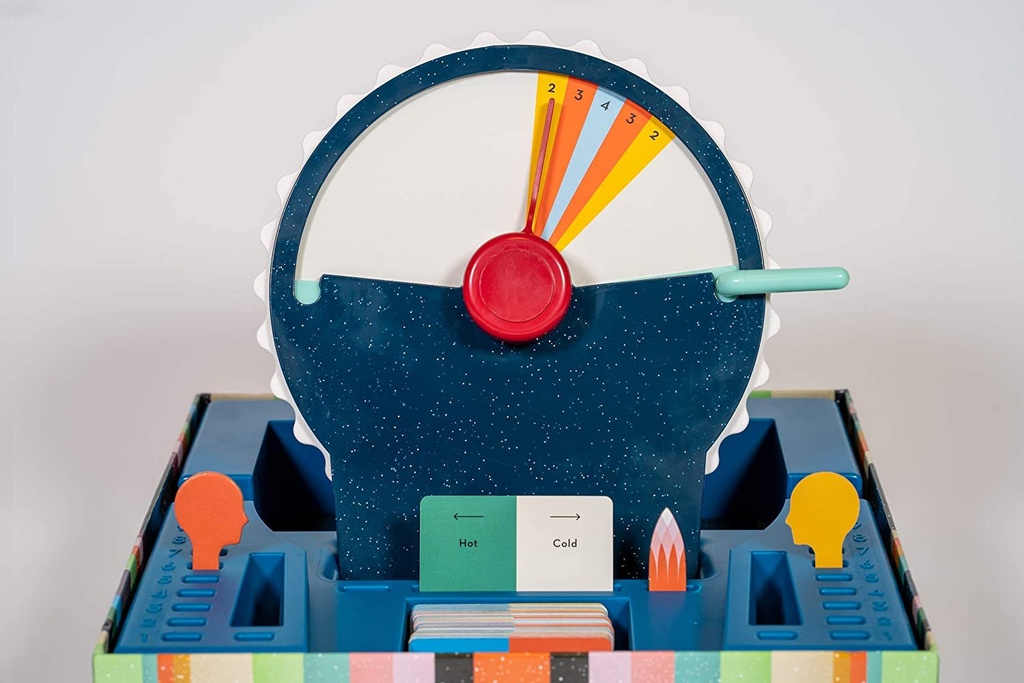
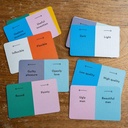
Teams take turns. One player becomes the Psychic and draws a card showing a spectrum with two opposing concepts (e.g., HOT ←→ COLD, JOB ←→ CAREER). A hidden bullseye is placed somewhere along that spectrum. The Psychic sees the bullseye but cannot directly point to it. Instead, they give a single clue—a word, phrase, or concept—that indicates the bullseye's location. For example, if the spectrum is HOT-COLD and the bullseye is slightly cold of centre, the Psychic might say "salad" (cool but not freezing). Their team discusses and rotates the dial to where they think the bullseye is. Score points based on accuracy: dead centre scores maximum points; further away scores fewer points. Teams alternate. After all rounds, the team with the most points wins.
Why you'll love it
Wavelength succeeds because it captures the essence of mind-reading without direct communication. The spectrum mechanics create infinite possibilities: any clue can work if it's conceptually positioned correctly. The Psychic must think laterally, finding clues that are neither too obvious nor too obscure. Teammates must interpret the Psychic's logic—creating hilarious debates ("Wait, you thought 'salad' meant cold?"). Perfect for groups who love wordplay, creative thinking, or anyone seeking a game that celebrates lateral thinking and intuition. The award-winning pedigree confirms quality. Works at any player count (2–12, with team play), making it perfect for pairs to large parties. Ages 14+ ensures adult-appropriate content and humour. At 30–45 minutes, games move at a satisfying pace. The dial mechanism is tactile and satisfying; physically turning it to your guess feels rewarding.
Game details
• Players: 2–12 (team-based play)
• Playing time: 30–45 minutes
• Age: 14+
• Genre: Party game, mind-reading, social deduction
• Themes: Communication, thinking, intuition, spectrums, conceptual thinking
• Gameplay: Spectrum-based clue-giving, team-based guessing, dial positioning, proximity-based scoring, intuitive thinking
• Mechanics: Spectrum card with binaries, Psychic role, conceptual clue-giving, dial positioning, accuracy-based scoring
• Spectrum cards: Multiple binary spectrums (Hot-Cold, Job-Career, Fantasy-Sci-Fi, Sad Song-Happy Song, etc.)
• Bullseye: Hidden position on spectrum that Psychic must indicate through conceptual clues
• Clues: Single words, phrases, or concepts indicating bullseye position on spectrum
• Dial mechanism: Teams rotate dial to where they think bullseye is located
• Scoring: Points awarded based on proximity to bullseye (centre = maximum points)
• Psychic role: Rotates each turn
• Team alternation: Teams take turns guessing
• Win condition: Most points after all rounds
• Player elimination: None (all players participate throughout)
• Awards: 2019 Golden Geek Best Party Game Winner; 2021/2022 Årets Spill Best Party Game Winner; multiple other nominations and wins
